Tuesday, December 27, 2011
Look. The point of this whole website is to post recipes that I like, so obviously I like everything on this website. But these potatoes are different. They changed me. They will change you. They may be the best recipe I’ve ever come up with. Do I sound confident? I do. Lets get started.

The smoke adds just one Calorie
There are a several things (in addition to butter) that make these potatoes yummy. A couple of them are unique, and as far as I know, straight out of my brain. I don’t have the heart to google it, and find out that there are 2,847,85 smoked mashed potato recipes out there already. Here are my provisionally unique and original insights: (Continued)
Brussels Sprouts are a controversial vegetable. Not just the taste either, the name confuses the hell out of people. So let’s clear something up. It isn’t “brussel sprouts”. It isn’t “brussel’s sprouts”. They are “brussels sprouts”. They are named after the city of Brussels. At least that is what I read on the internets. The main objection people have to the taste is the bitterness. I personally don’t taste too much bitterness in them, but I’m not a supertaster either. Supertasters are particularly sensitive to bitter tastes, so sucks to be them, because brussels sprouts can be awesome.

Please ignore the leg of duck with port-wine-balsamic glaze, it doesn't concern you
Brussels sprouts were first domesticated in Belgium around 500 years ago, and are descended from the family of wild cabbages found and eaten for thousands of years all around the Mediterranean. They are close relatives of modern cabbage. Which probably explains why so many people hate one if they hate the other.
(Continued)
Wednesday, March 23, 2011
Let’s not kill anyone, shall we? Always a fine goal when making any tasty treat. The risk with this recipe is higher than most, (primarily because of botulism) so keep that in mind, along with the fact that I’m not a professional, and basically don’t know what the hell I’m talking about. There. If that didn’t scare you off, then you must be my kind of people. Now let’s make some delicious bacon, without the terrifyingly unhealthy nitrates and nitrites!

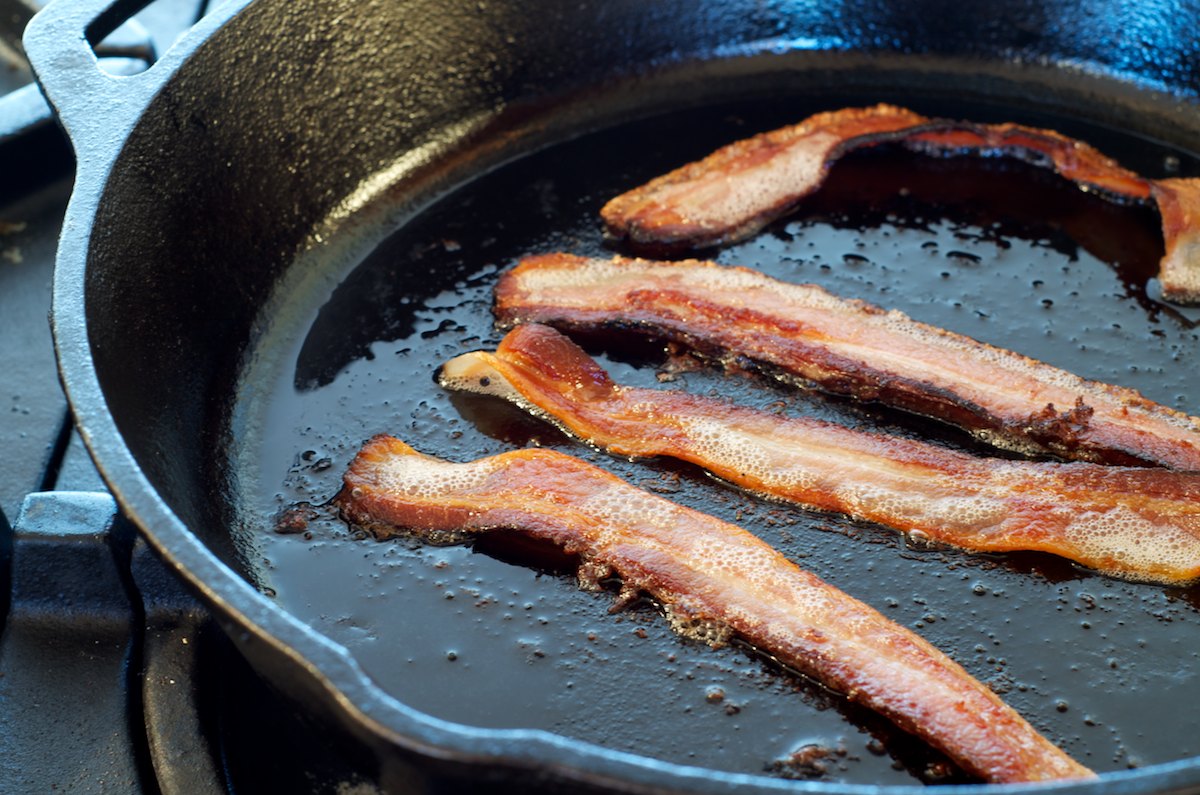
Tastes like bacon, but more so
My bacon is different than bacon you can buy at the store, and not just because it doesn’t have nitrates. Since we are using salt, sugar, and smoke as actual preservatives, rather than just flavorings, this bacon is much more intensely flavored that modern bacon. Since we are dry curing, the bacon loses water in the process, which concentrates and intensifies flavors compared to store bacon, which often has brine added to it to make it heavier! The upshot is that this bacon tastes more salty, more smoky, more intense, more “bacony”, and since it has less water in it, doesn’t spatter, pop, and curl as much during cooking either! Let’s cure some bacon!
(Continued)
We often had oatmeal for breakfast when I was a kid, and my mother would call up the stairs “sweet or savory?”, which meant we were supposed to choose which we wanted that day. We weren’t allowed both. Sweet meant milk, or cream (or both), with maple syrup, and sometimes fruit, raisins, cinnamon, etc. Pretty standard stuff. Savory, on the other hand, meant olive oil, soy sauce, nutritional yeast, and an egg. So, sweet or savory? A difficult call on any day, and I still go back-and-forth.

This is not weird
If wheat can work equally well in sweet or savory foods, why not other grains? In fact, most of them can. Oats are almost always eaten with brown sugar or maple syrup, maybe with some fruit and diary, or in sweet goods, (think cookies, crumbles). But I’m here to testify that, like wheat, oats are great savory too.
(Continued)
Monday, February 28, 2011
I just finished telling you why not to boil vegetables in my roast chard recipe. Now please enjoy this recipe for boiled beets. Wha? Everything I said in the linked post is true. Roast beats are delicious, and certainly more boldly flavored than these, but this recipe is about subtlety, texture, and letting some really great olive oil play equal co-star. Sure, boiling doesn’t bring out and intensify flavors like dry heat methods, but it is gentle, and preserves the tender, moist texture of lovely beets. A word about slicing… Slicing them thin and evenly is hard. If your beets are small enough, try the slicing face of your box grater. If you have a mandolin or even a meat slicer, you should give that I try. I sliced these by hand, and really, even thinner would have been better.

IF YOU DON'T LIKE THESE BEETS, YOU DON'T LIKE BEETS
(Continued)
Sunday, February 27, 2011
Heat does interesting things to food. The hotter, the more interesting. That isn’t always a good thing, seeing smoke roiling off of your focaccia can ruin your day. But very often people shy away from using high heat, when really they should give it a chance. So often people will steam or (gasp) boil vegetables, when really, roasting makes them so much yummier. There is a time and place for steaming and boiling, typically when you are going for soft and delicate textures. But if you want to boost flavor, you need more heat, and dryer heat.

DON'T RUIN THESE
So why intense, dry heat? Caramelization and flavor concentration. Caramelization is a process whereby sugars and starch in food (yes, chard has sugars in it) is broken down by heat into hundreds of different kind of fragments. Those fragments all have different flavors, flavors which we think of as “yummy” and also that add complexity and depth to the flavor profile. Dry heat also promotes concentration of flavors. Concentration of flavors simply happens when you reduce the amount of water in something. Have you heard of “reducing” a sauce? That is simply boiling away some of the water, leaving behind flavor. So roasting our chard in dry heat drives off moisture, and intensifying flavors. Boiling on the other hand doesn’t get hot enough for caramelization, and actually adds moisture, diluting flavor.
(Continued)
Monday, February 14, 2011
Peach Shortcake is one of those wonderful late summer treats, cool, juicy slices of peach sort of drooling their sticky, sweet juices all over a great crunchy/soft short biscuit. Simple. Seasonal. Delicious. Of course, at the moment it is February and raining, but if I don’t get some sort of break from this winter, I’ll go insane. I can’t make the sun come out, but I can make a great summer dessert, even in the winter, even with franken-peaches from an entirely different continent.

LIKE SUMMERTIME, BUT WITH A BIGGER CARBON FOOTPRINT
Peaches don’t grow here in February. They do, however, grow in Chile. How they get here is kind of fascinating, and kind of scary. Fruit is alive, it’s flesh made up of living cells. If they die, they rot. If you are shipping fruit a long way, or storing it for a long time, you want the cells to stay alive, but to be in hibernation, so that natural cellular processes, like ripening, enzymatic breakdown of starch, etc, slow dramatically. So, reduce temperature, reduce oxygen, and the cells slow down. But don’t remove oxygen all together, or reduce the temperature too much, or the cells will die.
(Continued)
Thursday, February 10, 2011
My Uncle Hall is a great baker and pastry chef. He makes a living doing it and everything. But before he switched careers and started prostituting his skills to the masses, our family had him and the fruits of his labor all to ourselves. As a child, one of my favorites appeared every year late in the fall, or early in the winter. Chestnut Meringue.

IT TASTES MORE SPECTACULAR THAN IT LOOKS

MY NUTS
He had a big chestnut tree in his yard, and all my siblings and cousins would comb the ground under the tree gathering chestnuts, and trying to avoid being pricked by their spikey seed pods. “Pricked” is sort of a gentle way of describing it, “impaled” might be more accurate.
(Continued)
Go. Go read my post about Really Good Steak . Almost all of it applies to cooking great steak indoors too. If you don’t read that post, don’t blame me if you don’t understand why surface moisture is terrible for a good steak, you couldn’t tell a Maillard reaction from a Mallard, and why to cook your steak slow and low, then hot and intense. This post is just to help out all of you deprived souls without access to some sort of live-fire cooking device.

NOT BAD FOR A RAINY DAY
(Continued)
Almost everyone sucks at making steak. Misinformation abounds. Fiascos are the norm. The worst thing is that most people are too polite/kind/naive to do anything but praise whatever horror show lands on their plate. The good news is that making great steak is only a little more difficult than making bad steak, and you won’t have to spend a cent more.


YES, PLEASE
So. What makes a good steak? (Continued)